Starting growth hormone before age 2 does not harm PWS sleep
Infants face no higher risk of airway blockages than older children: Study
Written by |





Starting growth hormone therapy before 2 years of age does not increase the risk of sleep apnea or breathing disruptions for children with Prader-Willi syndrome (PWS), according to a new study. The findings offer some reassurance for the current medical trend of treating PWS patients during infancy.
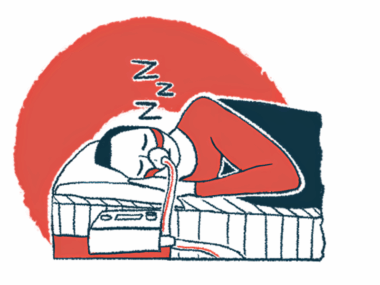
While older children often show more severe obstructive sleep apnea (OSA) before starting treatment, researchers found that the medication itself did not worsen breathing issues differently between age groups. OSA is when breathing stops and starts during sleep due to airway blockages.
“Very young children do not appear to be at higher risk of developing OSA than older counterparts,” researchers noted.
The study, “Age Does Not Affect Respiratory Characteristics in Children With Prader-Willi Syndrome Before and After Growth Hormone Therapy,” was published in Acta Paediatrica.

The role of growth hormone in PWS
PWS is caused by the loss of function of genes located in a region of chromosome 15 called the PWS locus. Symptoms include slow growth, excessive hunger, and behavioral problems.
People with PWS have an increased risk of sleep problems, including OSA and central sleep apnea (CSA), which is caused by impaired communication between the brain and breathing muscles.
Most PWS patients have deficient growth hormone levels, which regulate several biological processes, including growth and body composition. Human growth hormone, also known as somatropin (sold as Genotropin and Norditropin, with biosimilars available), is therefore a standard treatment for children with PWS.
Previous studies have suggested that growth hormone may increase the risk of developing OSA or of worsening the condition in children with PWS. However, most of these studies “have focused on children over 2 years,” the researchers wrote.
With doctors now recommending that children with PWS start growth hormone therapy in infancy, a team of Australian researchers set out to assess the treatment’s effects on sleep apnea in this younger patient group.
The researchers retrospectively analyzed data from 56 children with PWS: 35 younger than 2 years (median age of nearly 11 months) and 21 who were 2 years or older (median age of 6.6 years).
Sleep issues were assessed before (baseline) and after starting growth hormone therapy using polysomnographic studies or overnight diagnostic tests to monitor breathing patterns and other sleep parameters.
At baseline, children younger than 2 took significantly less time to enter the first rapid eye movement (REM) sleep stage after falling asleep (48 vs. 82 min) and had a significantly higher proportion of REM sleep (28% vs. 22%). REM sleep is an active, dream-filled stage that is essential for processing memory and emotions.
Younger children also had a lower proportion of sleep time in non-REM sleep (72% vs. 78%), a restful sleep phase with lower brain activity that is essential for reparative processes in the body. In terms of sleep disturbances, older children had a significantly higher mean number of upper airway blockages per hour of sleep, suggestive of more severe OSA, than younger children before growth hormone therapy.
Older children were more likely to have OSA (38.1% vs. 14.3%) and moderate or severe OSA (23.8% vs. 5.7%), but these differences did not reach statistical significance, meaning they could be due to chance. Notably, OSA was detected in nine of the 10 children 2 and older who were obese, obesity being the main risk factor for OSA.
In contrast, the CSA rate and the number of breathing stops due to CSA were comparable between the younger and older groups. Overall, 89% of the younger children and 71% of the older children started growth hormone therapy, particularly those without OSA. In children with moderate or severe OSA, growth hormone therapy was generally postponed.
After starting the treatment, six younger children (21%) and three older children (20%) developed OSA. OSA severity decreased in two older children who had mild OSA before growth hormone therapy.
CSA resolved in 21% of younger children and 6% of older children after growth hormone therapy, while 11% and 13%, respectively, developed the condition.
“Our study highlights that children under 2 years of age do not appear to be at higher risk of development of obstructive and central sleep apnea after growth hormone initiation,” the researchers wrote. “Despite differences in OSA severity at baseline between the age groups, initiation of growth hormone treatment did not have any differing effects.”