
 Discussion
Prader-Willi syndrome treatment
Last updated Sept. 25, 2025, by Lindsey Shapiro, PhD
 Fact-checked by Marta Figueiredo, PhD
Prader-Willi syndrome (PWS) treatment involves interventions to control disease symptoms, as there are currently no therapies that directly address the underlying PWS causes.
The genetic disorder is caused by the loss or inactivation of specific genes on the paternally inherited chromosome 15. This leads to a wide range of PWS symptoms, including stunted growth, developmental delays, insatiable hunger, obesity, and behavioral challenges.
While there is no cure for PWS, early intervention after a PWS diagnosis is key for managing symptoms and preventing the long-term health problems that can occur secondarily to uncontrolled eating and obesity.
Prader-Willi syndrome treatment options
PWS treatment involves a multidisciplinary approach that varies based on a person’s age and symptoms.
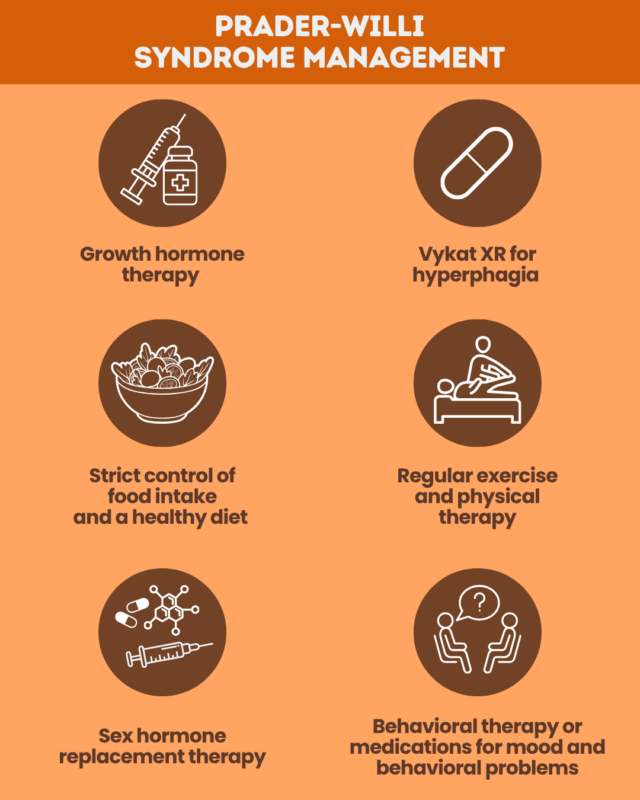
Growth hormone therapy, in the form of the lab-made human growth hormone somatropin, is a standard PWS treatment because nearly all children and many adults with the disease are deficient in naturally produced growth hormone.
Recommended to be started in early childhood, PWS growth hormone therapy has several benefits, such as increased height, lower body fat, greater muscle mass, better bone health, and improved physical and cognitive performance.
Somatropin, given via under-the-skin injections, is approved in the U.S. to treat growth failure in children with PWS under the brand names Genotropin and Norditropin, with a biosimilar available. These and other brand names can also be used in pediatric and adult PWS patients upon verification of growth hormone deficiency.
Also key to PWS management is controlling insatiable hunger, or hyperphagia, that starts in childhood and results in extreme food-seeking behaviors, obesity, and related health complications. Treatment for hyperphagia may involve:
- Vykat XR (diazoxide choline), a daily oral therapy designed to reduce appetite that’s approved in the U.S. for PWS patients ages 4 years and older
- strict food control and constant supervision when food is accessible
- a well-balanced, low-calorie PWS diet and frequent exercise to aid in weight management
Supportive care for PWS may also involve, but is not limited to:
- tube feeding, to provide adequate nutrition to infants
- sex hormone replacement therapy in PWS, to address low levels of sex hormones (testosterone in boys and estrogen and progesterone in girls)
- sleep management, including medications to reduce excessive daytime sleepiness
- therapeutic strategies, including surgery, to correct orthopedic issues like scoliosis
- physical and occupational therapy to combat low muscle tone and motor delays
- speech therapy to improve verbal skills
- medications or behavioral therapy for PWS to manage mood and behavior problems
Lifestyle changes
PWS management may also involve a range of lifestyle changes, typically implemented or promoted by parents, to minimize how intrusive PWS symptoms become in daily life. They include:
- sticking to a strict daily routine and setting clear expectations, particularly in terms of meal times
- engaging in regular physical activity
- dealing with emotional distress through emotional regulation activities, like quiet spaces and calming strategies
- having a personalized educational plan, designed together with the schools
- receiving mental health support through counseling, therapy, or support groups
Various specialists — including dietitians, physical, occupational, and speech therapists — may be brought on board to help families make the appropriate adjustments that work best for their child.
Emerging Prader-Willi syndrome treatments
While there are few available treatments specifically approved for PWS, a number of investigational PWS medications are currently being tested in clinical trials. Examples of therapies in Phase 3 clinical trials for PWS include:
- ARD-101, an oral therapy designed to lessen hyperphagia
- pitolisant, an oral medication intended to ease excessive daytime sleepiness
Gene therapies to correct the underlying cause of PWS are of interest to researchers, but no such medications have yet entered clinical trials.
Prader-Willi Syndrome News is strictly a news and information website about the disease. It does not provide medical advice, diagnosis, or treatment. This content is not intended to be a substitute for professional medical advice, diagnosis, or treatment. Always seek the advice of your physician or other qualified health provider with any questions you may have regarding a medical condition. Never disregard professional medical advice or delay in seeking it because of something you have read on this website.
Related articles
-
Discussion
-
 Discussion
-
Discussion
-
 Discussion
-
Discussion
-
 Discussion